White Spots on Teeth: Causes, Treatment and How to Remove Them
123 Dental, West Leederville Perth Last reviewed: March 2026
White spots on teeth are one of the more common concerns I see in patients at our West Leederville dental practice. They can show up as chalky patches, cloudy streaks, or uneven areas of colour on the enamel — and they often become more noticeable the more closely someone looks at their smile.
Many patients come to me assuming white spots mean something is seriously wrong with their teeth. In the majority of cases, the teeth themselves are perfectly healthy. The issue is cosmetic rather than structural.
The good news is that white spots on teeth are very treatable. Modern cosmetic dentistry offers several conservative options to significantly reduce or eliminate their appearance — often without any drilling or removal of healthy enamel.
In this article, I explain what white spot lesions are, why they develop, and what treatment options are available for patients in Perth.
What Are White Spots on Teeth?
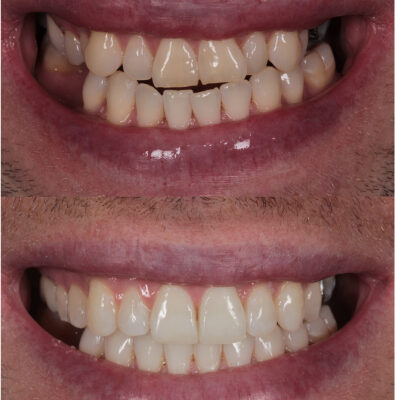
White spot lesions are areas of enamel that look lighter, chalkier, or more opaque than the surrounding tooth surface.
They can appear as cloudy white patches, thin white streaks across the enamel, small opaque spots on individual teeth, or areas of uneven colour that become more visible under bright lighting.
The reason they appear different is that the mineral structure of the enamel has changed in that area. This alters how light reflects off the tooth surface, making the spot look lighter than the healthy enamel around it.
One thing worth knowing: white spots sometimes become more noticeable straight after teeth whitening. This is not a cause for alarm, but it does mean that careful treatment planning before and after whitening is important.
What Causes White Spots on Teeth?
White spots on teeth can have several different causes. The right treatment depends on understanding which applies to you. Here are the most common ones I see in practice.
Fluorosis
Dental fluorosis is one of the most frequent causes. It occurs when a child is exposed to higher-than-normal levels of fluoride while their permanent teeth are still developing beneath the gums.
Fluoride is genuinely beneficial for preventing tooth decay — but too much during early childhood can interfere with how enamel forms. The result is often white streaks, patchy areas of lighter enamel, or a mottled, uneven appearance across multiple teeth.
Importantly, fluorosis does not weaken the teeth. Many patients with fluorosis have structurally strong, healthy enamel but are understandably unhappy with how their smile looks.
Tetracycline Staining
Tetracycline antibiotics, which were commonly prescribed to children in decades past, can cause lasting colour changes to the teeth when taken during development. The medication binds to the developing tooth structure, affecting both the enamel and the dentine underneath.
This can result in white patches, yellow or grey discolouration, or horizontal bands across the teeth. Because the staining occurs deeper within the tooth, it sometimes requires more advanced cosmetic treatment to address effectively.
Developmental Enamel Defects
In some cases, enamel simply does not develop perfectly. This can happen as a result of illness, high fever, nutritional deficiencies, trauma to a developing tooth, or genetic factors.
The result may be white or cream-coloured patches, yellowish areas, or sections of enamel that appear dull and opaque. Every case presents differently, which is why individual assessment is so important before recommending treatment.
White Spots After Braces
Post-orthodontic white spots are something I see regularly in patients who have recently had fixed braces removed. They develop when plaque builds up around orthodontic brackets over time. The bacteria in that plaque produce acids that draw minerals out of the enamel surface — a process called demineralisation.
The enamel itself is still intact, but the change in its mineral content causes it to reflect light differently, creating the characteristic white spot appearance.
The good news is that these post-braces white spots often respond very well to minimally invasive treatment, particularly when addressed early.
How to Treat White Spots on Teeth
When it comes to treating white spot lesions, I follow a conservative, step-by-step approach. The goal is always to improve the appearance of the teeth while preserving as much natural tooth structure as possible.
The most appropriate treatment depends on the cause, the depth of the lesion, and how many teeth are affected.
1. Professional Teeth Whitening
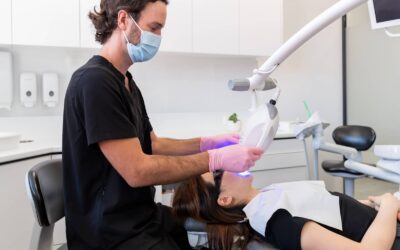
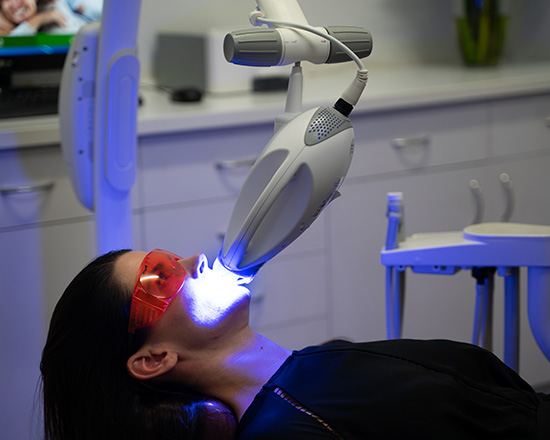
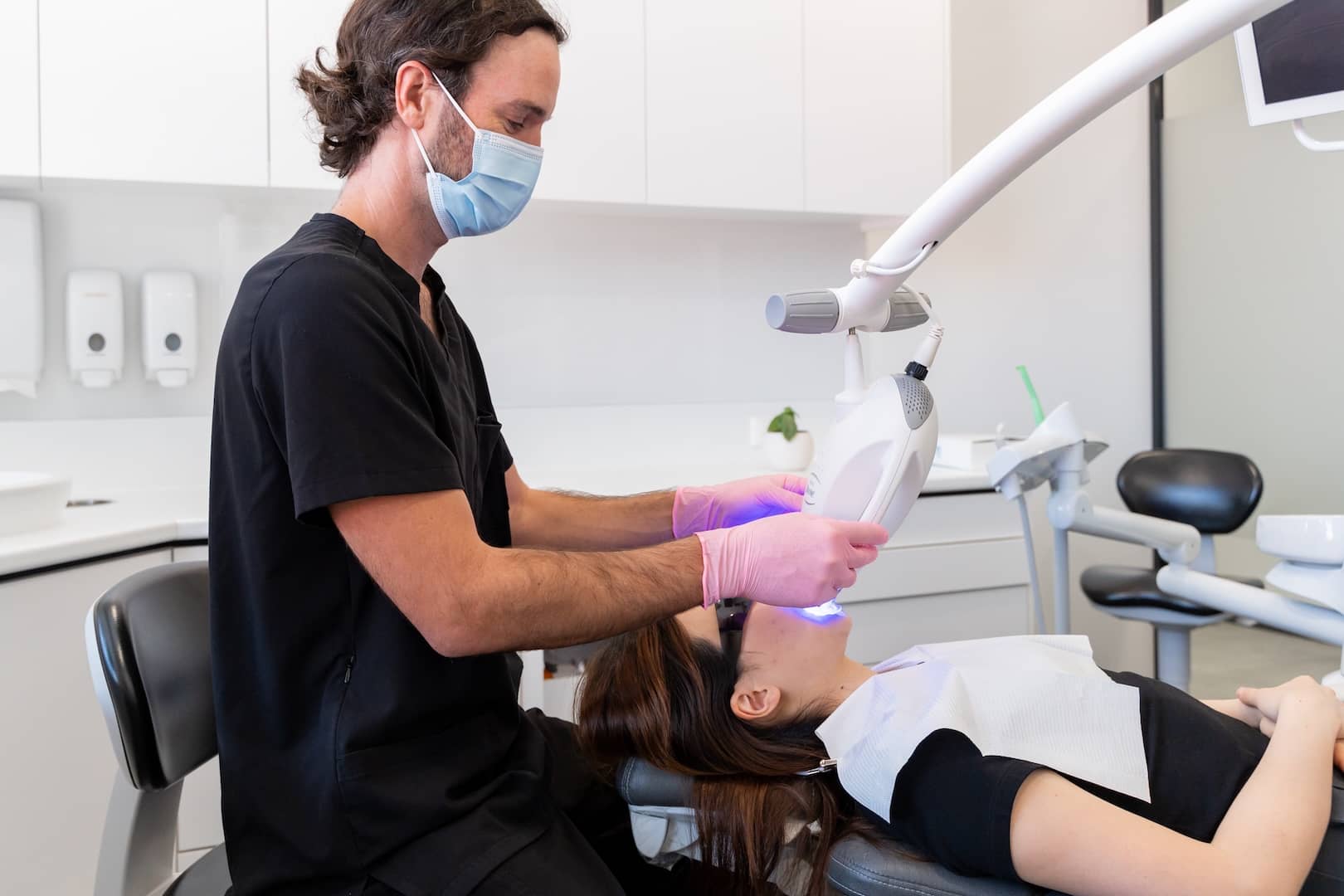
Professional teeth whitening is often the first step in the treatment process. Whitening does not remove white spots directly, but it can reduce the contrast between the spot and the surrounding enamel, making the overall appearance of the smile more even.
It also helps us see the true underlying colour of the teeth, which is useful when planning any further treatment needed.
2. Icon Resin Infiltration
One of the most effective and conservative treatments now available is resin infiltration, most commonly performed using the Icon system.
This technique involves applying a clear resin to the enamel surface. The resin fills the altered mineral structure of the spot, changing the way light passes through the tooth — which can dramatically reduce or eliminate the visible appearance of white marks.
No drilling is involved, and no healthy tooth structure is removed. Icon resin infiltration works particularly well for fluorosis, white spots after braces, and mild developmental enamel defects. For many patients, it delivers a significant result in a single appointment.
3. Composite Bonding
For deeper or more pronounced marks, composite bonding can be an effective option. This involves placing tooth-coloured resin material directly over the affected area to improve both colour and shape.
Composite bonding can often be completed in a single visit and is a relatively conservative cosmetic procedure that preserves the underlying tooth.
4. Porcelain Veneers
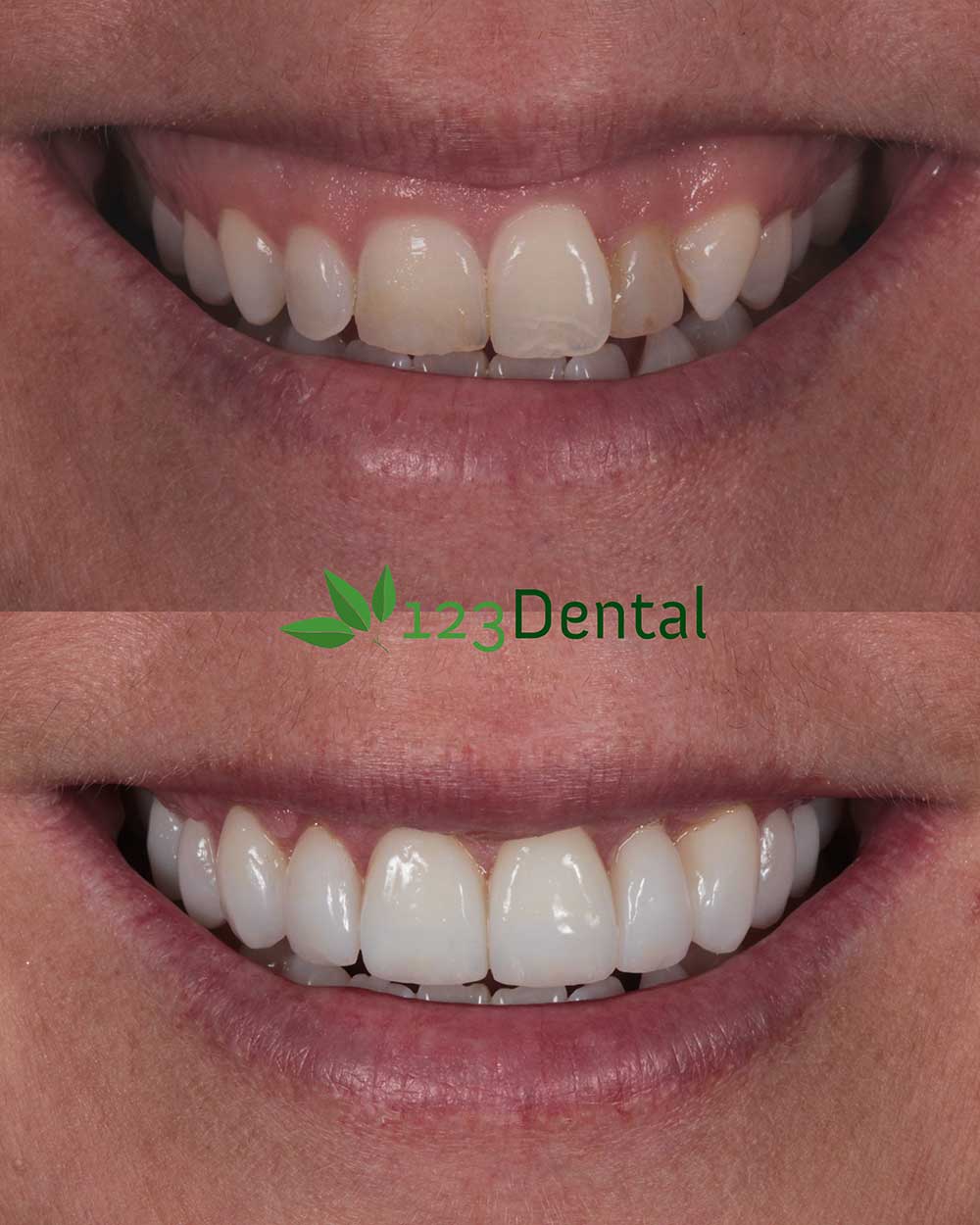
In more severe cases — such as significant fluorosis, tetracycline staining, or multiple areas of discolouration — porcelain veneers may offer the most predictable and long-lasting cosmetic result.
Veneers are thin ceramic shells bonded to the front surface of the teeth to create a uniform colour and a natural-looking smile. While they involve more preparation than the other options listed above, they can deliver excellent results when carefully planned for the right patient.
Why Starting with the Most Conservative Option Matters
One of the reasons I wanted to write this article is that many patients arrive at their first consultation assuming veneers are their only option. That is understandable — veneers are well-known and widely discussed — but in reality, a large proportion of white spot lesions can be significantly improved with much less invasive treatments.
Starting conservatively — with whitening and resin infiltration where appropriate — allows us to improve the appearance of your smile while keeping your natural enamel intact. We only move to more involved procedures if simpler options haven’t achieved the result you’re looking for.
Ready to Get Your White Spots Assessed?
If you’re noticing white patches or uneven colouring on your teeth and you’re based in Perth, the first step is understanding what’s causing them. A professional examination can confirm the underlying cause, check that the enamel is healthy, and help you understand which treatment options are most likely to work for your specific situation.
Early assessment often means more treatment choices and better outcomes — particularly for post-braces white spots, where timing makes a real difference.
Book a consultation at 123 Dental in West Leederville and we’ll take the time to assess your teeth, explain what’s going on, and discuss the most suitable path forward.
White Spot Treatment at 123 Dental, West Leederville Perth
At 123 Dental, we offer the full range of treatments for white spots and enamel discolouration, including:
- Professional teeth whitening — in-chair and take-home options
- Icon resin infiltration — minimally invasive, no drilling required
- Composite bonding — single-visit cosmetic improvement
- Porcelain veneers — for more advanced or widespread discolouration
We’re located at Level 1, 115 Cambridge Street, West Leederville WA 6007, and we see patients from across the Perth metro area. To book an appointment or ask a question, get in touch with our friendly team.
Dr Alex Poli practises at 123 Dental in West Leederville, Perth. 123 Dental has been serving the local community for over 30 years, offering a full range of general and cosmetic dental services.