
Ultimate Veneers Guide: Costs, Types, Pros and Cons
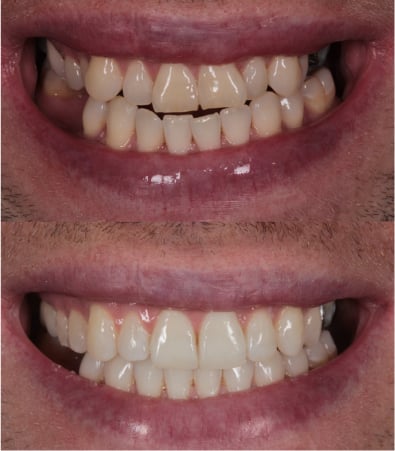
If you have chipped, worn, uneven or discoloured front teeth, veneers are one of the most commonly discussed cosmetic dental treatments in Australia. Veneers are thin coverings bonded to the front of teeth to improve shape, colour and overall appearance. They can be made from porcelain or composite resin, and may be used on one tooth or several depending on your smile goals.
For many patients, the hardest part is not understanding what veneers are — it is working out whether they are actually the right choice, what they cost in 2026, and whether the result justifies the investment. This guide breaks that down clearly.
Quick Answer
In Australia in 2026, composite veneers are generally the lower-cost option, while porcelain veneers cost more but are often chosen for their durability and more refined appearance. Across Australian dental pricing guides published in early 2026, composite veneers are commonly listed from around $500 to $1,500 per tooth, while porcelain veneers are commonly listed from around $1,200 to $2,500 per tooth. Pricing varies based on the material, the number of teeth treated, the complexity of the case, laboratory work, and the clinic you choose.
Curious about your options? You can book a consultation with our team to get a personalised assessment and quote.
What Are Veneers?
A veneer is a thin shell attached to the front surface of a tooth to improve how it looks. In Australia, the two main options are:
- Composite veneers — made from tooth-coloured resin, often completed in a single visit
- Porcelain veneers — custom-made in a laboratory and then bonded to the tooth, usually requiring more than one appointment
A simple way to think about it:
- Composite veneers are usually faster and more affordable
- Porcelain veneers are usually more premium and more customised
To see the full range of smile treatments available, visit our cosmetic dentistry page.
Why Patients Consider Veneers
Veneers are usually chosen to improve visible cosmetic concerns rather than to fix major structural dental problems. They may be suitable for teeth that are:
- chipped or worn down
- uneven in shape or mildly misaligned in appearance
- discoloured and not responding well to whitening
- spaced in a way the patient wants improved
That said, veneers are not the best solution for every smile. If a tooth is badly broken, heavily filled, weak, or affected by bite issues or grinding, another treatment such as a crown, orthodontics or a more conservative option may be more appropriate.
Types of Veneers in 2026
Composite Veneers
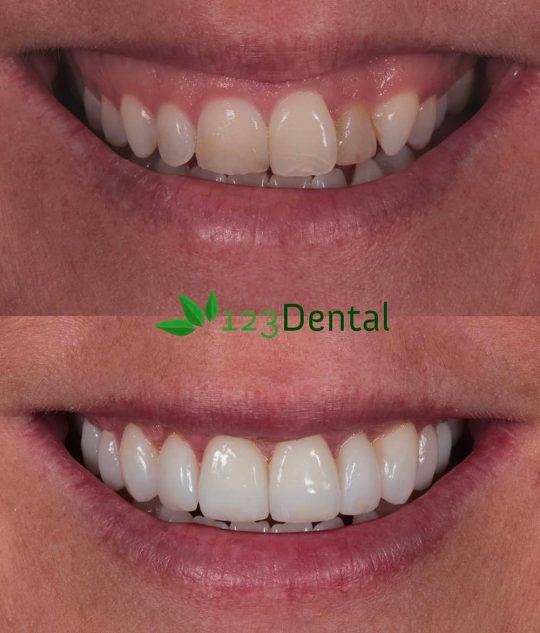
Composite veneers are made from resin — the same broad material family used for white fillings. The resin is applied directly to the tooth in layers, then shaped and polished, often in a single appointment.
Composite veneers are generally chosen by patients who want:
- a lower upfront cost
- a quicker result
- a more conservative first step
- smaller cosmetic improvements such as chips, shape corrections or minor gaps
Porcelain Veneers
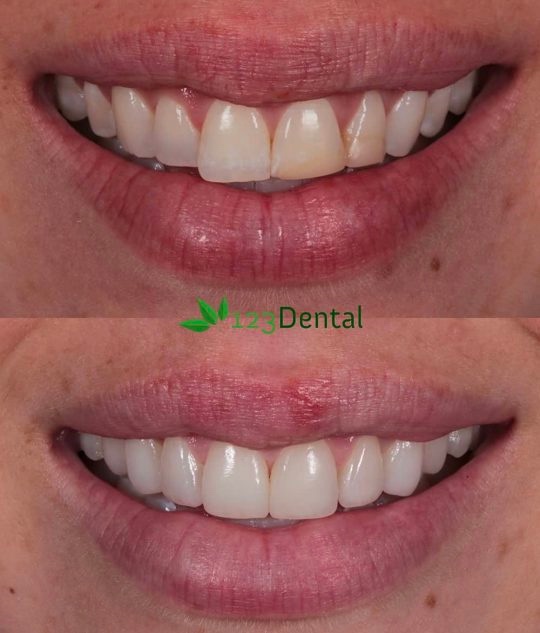
Porcelain veneers are custom-made shells created after planning, impressions or digital scans. Treatment involves material selection, planning, preparation and bonding — usually across more than one visit.
Porcelain veneers are often chosen by patients who want:
- a more premium, highly aesthetic finish
- stronger stain resistance
- more detailed smile design
- longer-term cosmetic improvement across several front teeth
You can learn more about both options on our dedicated veneers page.
Other Veneer Materials
Some Australian clinics now market hybrid or ceramic-based alternatives. For most patients, however, the real comparison still comes down to composite vs porcelain.
How Much Do Veneers Cost in Australia in 2026?
Based on Australian dental pricing pages published in early 2026, typical veneer cost ranges are:
| Type | Cost Per Tooth |
|---|---|
| Composite veneers | ~$500 – $1,500 |
| Porcelain veneers | ~$1,200 – $2,500 |
What a Full Smile May Cost
Most veneer cases involve the visible upper front teeth rather than every tooth. Early 2026 Australian guides note that:
- 6 to 10 composite veneers may range from roughly $2,700 to $12,000
- 6 to 8 porcelain veneers may range from roughly $7,200 to $20,000
These are broad estimates only. A single composite repair for a chipped tooth sits in a very different bracket to a full porcelain smile design case.
We offer flexible payment options to help make treatment more manageable — ask us about what is available when you book.
Why Veneer Prices Vary
Veneer pricing depends on:
- the material used
- how many teeth are being treated
- the complexity of the case and smile design involved
- whether lab-made porcelain is needed
- the dentist’s experience with cosmetic cases
- whether other treatment is needed first (such as whitening, gum work or bite management)
Pros and Cons of Composite Veneers
Pros
- Lower upfront cost — consistently the more affordable entry point in 2026
- Often completed in one visit — a significant advantage for patients wanting a quick result
- Good for small cosmetic fixes — chips, shape irregularities, minor gaps
- Repairs are simpler — composite can often be touched up or adjusted more easily than porcelain
Cons
- Less durable than porcelain — more prone to wear, chipping and surface dulling over time
- More likely to stain — particularly for patients who regularly consume coffee, tea, red wine or tobacco
- May not match porcelain’s refinement — for complex smile makeover cases, the finish may not reach the same level of detail
Pros and Cons of Porcelain Veneers
Pros
- Highly aesthetic result — porcelain closely mimics the translucency and natural appearance of enamel when well designed
- Better stain resistance — a strong option for patients wanting a bright, long-lasting result
- Premium durability — consistently positioned as the longer-term cosmetic option in Australian treatment guides
- Ideal for smile design cases — particularly where multiple front teeth are being reshaped for consistency and symmetry
Cons
- Higher cost — often substantially more than composite
- Usually requires multiple visits — planning and lab fabrication are involved before final bonding
- Not ideal for every tooth — bite issues, enamel quality, gum health and grinding habits all matter
- May involve conservative enamel preparation — the amount varies by case and technique
Are Veneers Worth It?
For the right patient, veneers can be genuinely worthwhile — they can change the visible shape, colour and balance of a smile in ways that whitening or minor repairs simply cannot achieve.
They tend to be most worthwhile when:
- the main concern is cosmetic
- the teeth and gums are otherwise healthy
- the chosen material matches the budget and expectations
- the bite and long-term maintenance have been properly considered
They may be less appropriate where untreated grinding is present, or where orthodontic or restorative treatment would better address the underlying problem.
Our experienced dental team can help you assess whether veneers are the right fit for your smile and goals.
Who Is a Good Candidate for Veneers?
Suitable candidates typically have:
- healthy teeth and gums
- cosmetic concerns affecting the front teeth
- enough enamel for bonding
- realistic expectations and commitment to ongoing maintenance
A patient may need other treatment first — or an alternative approach — if they have active gum disease, untreated decay, heavy grinding or clenching, severe crowding or bite issues, or significantly weakened teeth.
The Veneer Process: What to Expect
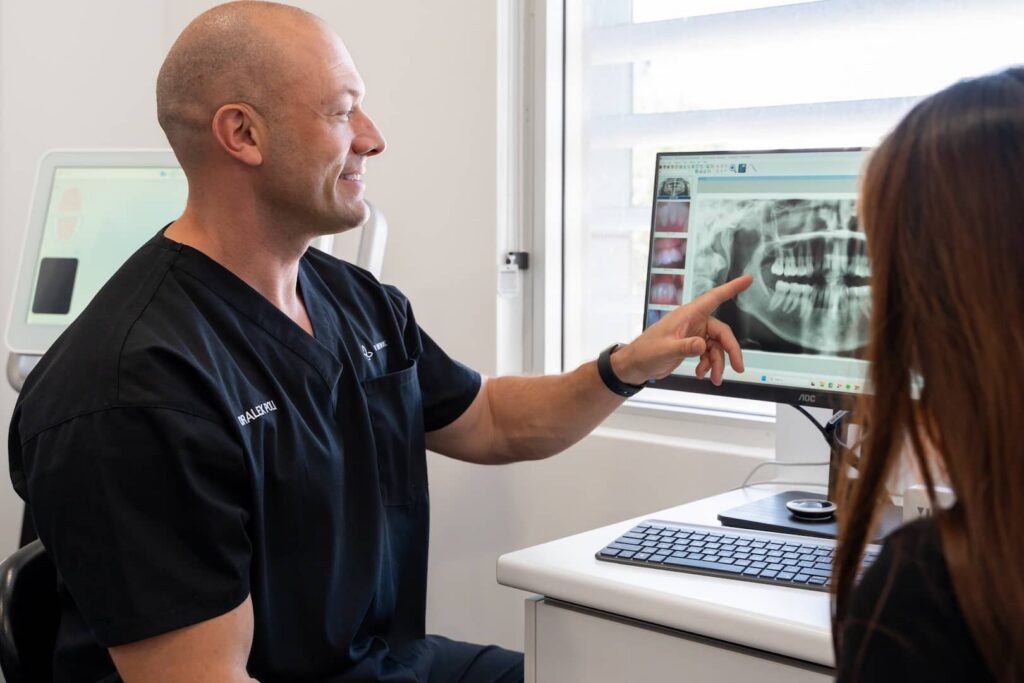
1. Consultation and Smile Assessment
Your dentist assesses your teeth, gums, bite and goals, and discusses whether veneers are appropriate. Book your consultation here.
2. Planning
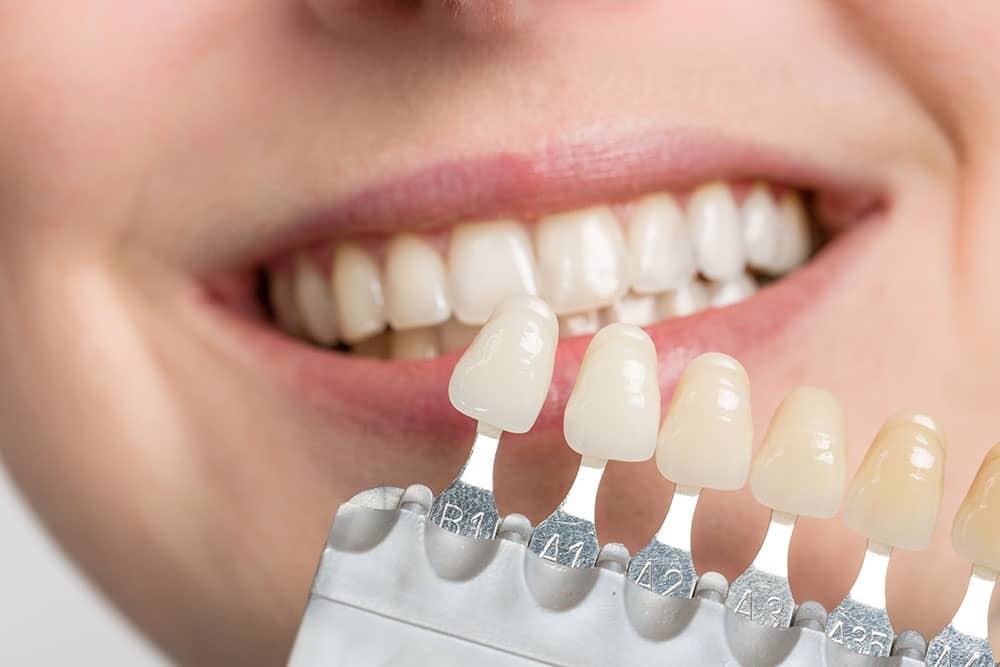
For porcelain cases especially, this may include photos, scans, shade discussion, mock-ups or digital smile planning.
3. Tooth Preparation
For composite veneers, preparation is often minimal or none at all. For porcelain veneers, a small amount of enamel is typically adjusted so the veneers sit naturally.
4. Placement
Composite is built and polished directly on the tooth. Porcelain is bonded after custom fabrication.
5. Review and Ongoing Care
Your bite, comfort and appearance are checked, and you receive care instructions.
How Long Do Veneers Last?
Australian clinic pricing guides published in 2026 commonly estimate:
- Composite veneers: around 4 to 8 years
- Porcelain veneers: around 10 to 15 years
These are typical estimates, not guarantees. Longevity depends on the material, treatment quality, your bite, and how well you care for them.
How to Care for Your Veneers
- Brush twice daily with a soft toothbrush
- Clean between teeth every day
- Attend regular dental check-ups and cleans
- Avoid using teeth to open packaging
- Be careful with very hard foods
- Wear a night splint if you grind or clench
- Ask your dentist before using whitening products
Veneers vs Other Treatments
| Treatment | Best For |
|---|---|
| Veneers | Shape, colour and symmetry of front teeth |
| Whitening | Colour only — no change to shape or chips |
| Composite bonding | Smaller repairs and touch-ups conservatively |
| Crowns | Significantly damaged or weakened teeth needing full coverage |
| Orthodontics | Alignment and bite issues at the source |
Explore the full range of cosmetic dentistry options at 123 Dental to see which treatment best suits your goals.
Questions to Ask Before Getting Veneers
Before committing, ask your dentist:
- Am I a good candidate for veneers?
- Would composite or porcelain suit me better?
- How many teeth actually need treatment?
- Will any enamel need to be removed?
- What will maintenance and replacement likely involve?
- What happens if I chip or damage one?
- Are there alternatives that may suit my goals better?
- What is included in the quote?
These questions often matter far more than chasing the lowest headline price.

Ready to Find Out If Veneers Are Right for You?
Veneers can be an excellent option when you want to improve the visible appearance of your smile — but they are not one-size-fits-all. The best outcomes come from careful assessment, realistic expectations and choosing the right treatment for your specific situation.
Our team at 123 Dental is experienced in cosmetic dentistry and can walk you through your options honestly. Learn more about us, explore our veneer treatments, check our payment options, or book an appointment today.